Applications that should stay on separate briefs
Protection on a single-mode span
A 1x2 latching switch can move traffic between a working route and a protect route. Record reach, wavelength, and the optical budget after connectors. Single-mode plant, often discussed against ITU-T G.652 or G.657 bend performance, is the usual choice when the span is long. Multimode is a different argument and belongs on short jumper jobs, not on this span by default.
Polarization-sensitive sensing
Interferometers and some distributed sensors care about the slow axis. Write the PM fiber type, the extinction ratio the instrument needs, and the connector key. Insertion loss still matters, but a low-loss standard switch that scrambles polarization is the wrong family even when the dB number looks attractive on a non-PM sheet.
Monitoring and test access
A 1x4 or 1x8 tree feeds an OTDR or a power meter. Channel count, switching time, and repeatability are the buyer questions. Receiver sensitivity of the instrument is not a property of the switch. Keep the instrument model in the note so the factory does not treat the tree as a traffic switch.
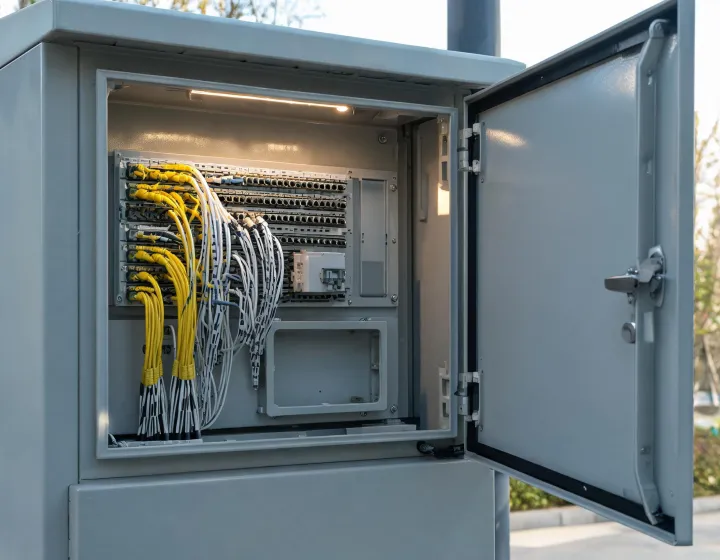
Site constraints to confirm: rack unit or DIN space, supply voltage, ambient temperature, whether the cabinet is outdoors, and who may approve a deviation during the splice window. Delivery stages can be a sample piece, a pilot quantity, then the balance. Say which stage needs the datasheet before the next release. A new unit may offer a clearer support path. A refurbished unit may cover a legacy port map when condition, remaining support, and the exact test sheet are verified. Those are opposing buying arguments, and neither one is assumed here.
Worked site note, not a finished installation: a utility asks for eight PM channels at 1550 nm into one monitoring port, FC/APC, quantity 12 pieces, destination a Utah yard, timing before the outage date written on the form. The desk asks factories for loss per channel, extinction, and whether the control lead is included. The buyer compares those replies. This page does not award the yard to any factory.
Related cards sit on the product inquiry list. The brief article lists the evidence columns in table form.