Quotation scope

PM optical switch requirements each factory must quote

A polarization-maintaining path fails quietly when the slow axis, the connector key, and the extinction ratio are left off the request. LinkScope Sourcing 06 uses this page to line up those fields before any factory number is treated as comparable.

  1. Name the PM fiber, the operating wavelength, and the axis alignment the drawing already uses.
  2. State the port map and whether the switch must hold state without holding current.
  3. Ask for extinction ratio, insertion loss, and return loss on the proposed model, with the test wavelength written beside each figure.
  4. Separate the switch price from PM patch cords, keying adapters, and freight to the US destination.
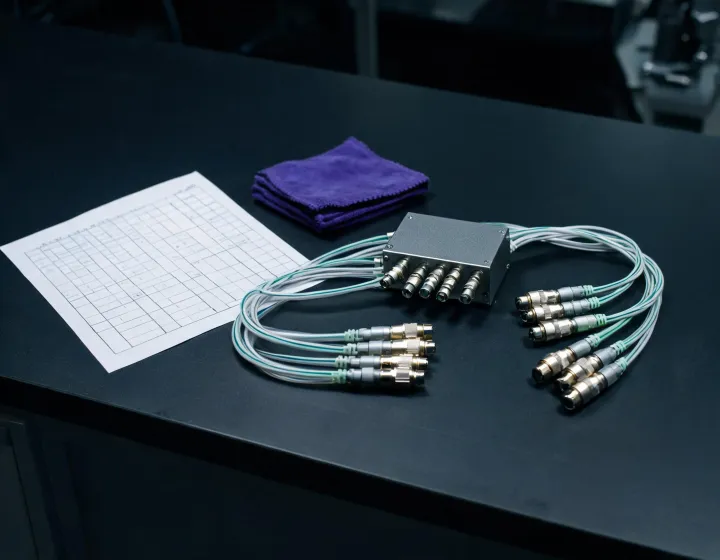
PM fiber optical switch with keyed FC connectors on a lab bench

Interface fields that keep PM quotes apart

Axis and wavelength

Record 1310 nm or 1550 nm, or the band the sensor actually uses. Ask which axis is aligned to the connector key. A standard single-mode jumper is a different plant and should not be substituted in the same sentence as the PM switch.

Extinction and loss

Buyers often write a polarization extinction ratio target such as 20 dB or 23 dB and an insertion loss target such as 0.8 dB or 1.2 dB. Those figures are the buyer request. The factory must tie its own measured values to the model it offers, at the wavelength named above.

Connector and polish

FC/APC, FC/UPC, and LC/APC change return loss and key orientation. State the polish and the key type. A photograph of a metal body does not identify either one.

Control and temperature

List the control interface and the ambient range at the rack. An industrial enclosure at the edge of a hut is not the same thermal case as a lab bench. Ask the proposed unit for its rated temperature range instead of copying -40 C to 85 C from a different family.

Costs that need their own lines include PM pigtails, spare connectors, calibration sheets, export paperwork, and any software used to log the switch state. If a line is excluded, the factory should say so in words. The desk will not fill that gap with an assumed accessory kit.

Worked comparison, not a past shipment: two replies both say 1x2 PM at 1550 nm. One includes keyed FC/APC pigtails and a 23 dB extinction note on its datasheet. The other prices a bare module and leaves the pigtail as optional. Procurement keeps them in separate columns until the pigtail, the currency, and the Houston or Dallas destination are aligned. No percentage cut is calculated on this page.
Scope questions for the PM request

Which requirements must every supplier quote?

Port map, wavelength, PM fiber type, connector and key, extinction ratio, insertion loss, return loss, control voltage, quantity, and destination. Diagnostics such as a position read-back should be marked required or optional so a silent switch is not priced as if it reported state.

Which costs sit outside the unit price?

Freight, duties, pigtails, adapters, a spare unit, and incoming inspection travel are easy to hide inside one number. Ask for them as separate lines. A missing line is an open question, not a zero.

What evidence is enough to compare?

A current datasheet that names the manufacturer and model, plus the test wavelength for loss and extinction. ITU-T fiber recommendations explain the plant vocabulary. They do not prove the switch under discussion meets a loss target.

Ask factories for a PM optical switch reply

Put the axis, the connector key, the piece count, and the US receiving site in the same note. The inquiry cards can start the product name. This form is where the PM details travel.